


Replacing the TMS320F280039C with the 32-bit DSP GX320F280039C for Photovoltaic Inverter Applications
Time:2026-10-27
Views:0
A photovoltaic (PV) inverter converts the DC power output from PV modules into AC power synchronized with the grid, while ensuring that the modules always operate at the maximum power point. This process involves high-speed PWM modulation, synchronous sampling of multiple analog signals, grid phase tracking, and fast protection response, which places real-time performance requirements on the controller far higher than those of general-purpose MCUs. The limitations of traditional analog control schemes in algorithm flexibility, parameter tuning, and system integration have driven the widespread adoption of digital control schemes in PV inverters.
The GX320F280039C is a high-performance floating-point DSP designed entirely in-house, featuring a self-developed 32-bit core architecture. Positioned around digital power and motor control, its architecture is optimized for power electronics peripherals such as PWM, ADC, and comparators, providing complete digital control capability in PV inverter scenarios. The GX320F280039C operates at a main frequency of 120 MHz and integrates a large number of peripheral components, offering high performance, low power consumption, and high reliability.
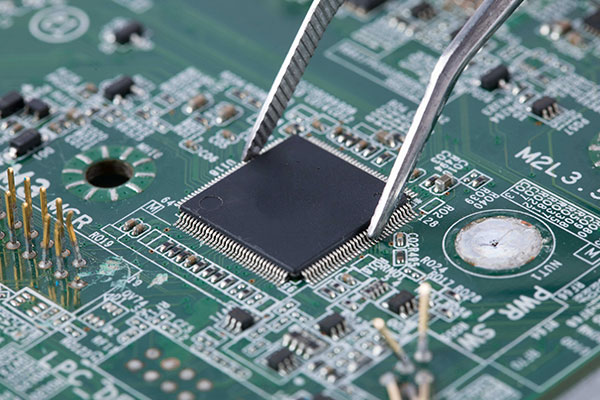
Key features of the GX320F280039C DSP are as follows:
Self-developed core: 32-bit in-house designed core, CLA support, floating-point operation support, 120 MHz main frequency, maximum execution efficiency of 240 MIPS
Operating voltage: single power supply (3.3 V)
Operating temperature: Grade A (industrial): -40°C to 85°C; Grade E (industrial enhanced): -40°C to 125°C
Memory system: 384 KB on-chip Flash (ECC protected), 69 KB on-chip RAM (ECC or parity protected)
Communication interfaces: I2C, SPI, SCI (UART), CAN, LIN, FSI, PMBUS, HIC
Analog peripherals: 3 × 4 MSPS, 12-bit ADCs; 4 DAC comparators (CMPSS) with 12-bit reference; 2 × 12-bit buffered DAC outputs
Control peripherals: 4 configurable logic blocks (CLB); 16 enhanced PWM channels, including 8 high-resolution PWM channels; 3 enhanced CAP modules, including one high-resolution CAP; 2 enhanced QEP modules; 8 sigma-delta filter module (SDFM) output channels

 mail
